Mitcheldean – Footprints Through Time
by Kay A Wozencroft
Introduction
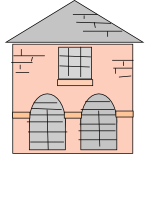
Nestling at the root of Plump Hill, Mitcheldean has grown from a tiny settlement to a sizeable town. In 1781 Mitcheldean was a small market town, it’s life centering around the town hall circa 1710 (site of the former covered market) and a handful of small dwellings and Inns. The town hall still stands a sturdy square building with mullioned windows and residual arches on the ground level. Its immediate neighbour is The White Horse Inn, a fellow survivor of Mitcheldean’s varied and occasionally violent past.
A Turbulent Past
During the late 1700’s rioting and even murder cast their shadow over the town. Bread riots erupted throughout the Forest of Dean as people starved whilst grain from surrounding farms was diverted to the army in the Spanish Peninsula. A disturbance at Mitcheldean led to a detachment of soldiers being sent from Newnham to quell the unrest. However, the mischievous Mitcheldeaners were not easily quelled and an officer was struck on the head by a well-aimed stone lobbed no doubt with plenty of Forest muscle. Eli Hatton, who was convicted of murder in 1723 and hanged at Pingry Tump at Wigpool overlooking the town, is said to have cursed the town to plagues of flies! Eli’s alleged victim was Tom Twibervile, a Carpenter who was battered to death in his shop in the town. Eli’s body was hung in a gibbet, a grim signpost to the town.
Industrial Heritage
Gold was once mined at Wigpool, (a scattered settlement between Mitcheldean and Drybrook) but nobody became rich! Mitcheldean once boasted a Brewery as well as several Inns. The White Horse, The Greyhound (on the site currently occupied by the Post Office) The Jovial Colliers, The George and The Lamb, all ensured that Mitcheldeaners need never go thirsty. As well as a Brewery, the town was once home to clock making, pin making, a brick works and quarry there was also a cement works on The Stenders. A further quarry and Lime Kilns were to be found on Plump Hill. There was a gas works and waterworks at Wigpool (the latter still operating). Nearby Abenhall once boasted the only Dentist in all of Gloucestershire and a professional seamstress lived at Mill End. Sadly she became blind due to the strain on her eyes as a result of her intricate work. At Fairplay on The Plump there was Iron mining and Iron one was also mined at Wigpool, when an attempt was made to mine Gold there. The sinking of an airshaft caused Wigpool wells to dry up. There was a Blacksmiths forge on the Gloucester road where the Smith would not only shoe horses but make and repair tools, plough blades etc. and fashion Iron gates and railings. The Point Inn stood on a sweeping bend on Plump Hill but was demolished circa 1960. The Hill also once had a Tin Chapel and a little shop which supplied bread and other essentials the Plump Hillers. There was a Saw Mill on The Stenders and the surrounding area was largely forest or farmland. Farmers used to bring their grain to the towns market to sell although the bread riots of the 1700’s probably helped to discourage them and bring an end to the market. Rank Xerox was for years the main employer in Mitcheldean and indeed the whole forest, today the site it occupies is also home to a number of other businesses including some housed in the old Brewery Malting’s which still stand on the site.
An Ancient Heart in a Modern Town
In Mill End stands the old General Store with its former gun range and next to it the lovely 16th century timber framed houses which draw the mind back into the past. In New Street, St George’s Villas stands imposingly behind its Iron railings, a handsome building dating from 1683. Mitcheldean’s primary school used to be housed in a Victorian building halfway up Hawker Hill. (Possibly named for the itinerate salesman who peddled their wares in the town). Plump Hill School circa 1878-9 stood at the end of Jubilee Road. Forest Gate Church is the oldest Dissenters House in The Forest; it stands on the Gloucester road, a little further up stand Judges Lodgings where the brutal “Hanging” Judge Jefries once stayed. The Medieval Church in the center of the town is an imposing landmark drawing the visitor’s eye. In the porch of this church can be seen recorded several bequests made to the town including that of John Harvey Ollney of Hertford, a Lieutenant Colonel in the South Gloucestershire Melitia. By the terms of his will in 1839, the Rector and Church Wardens were instructed to invest the sum of £200 and from the income distribute blankets and coals to the poor and deserving persons of the Parish.
Mad House to Movie House
The Colchester Wemyss family once owned the Wilderness which stands in its own grounds high on Plump Hill. In later years the house was an asylum and then a hospital. Wigpool is the site of Christ-is-a-weeping (Also called Jesus Weeping) a natural formation in the rock wall of an old Iron Mine which seemed to depict a weeping Christ. During the last war U.S. troops were based on Wigpool and used the mine as a makeshift cinema. There is a story that when the Americans left The Forest they dumped Jeeps and other vehicles and equipment down some of these old mines and then blasted the entrances to close them.
Witches in the Dean?
As recently as 1905 local people would carry Hazel twigs to ward off Witches and in that year a Forest woman called Ellen Hayward was accused of Witchcraft. She was said to have been the source of a series of terrible misfortunes that befell the family of one John Markey from May Hill who had previously consulted her concerning some stolen money. Her case was eventually dismissed.
Final Word
Mitcheldean is at once an ancient and a very modern town. Proud of its past and looking eagerly towards the future.
Acknowledgements
The Forest Of Dean by Humphrey Phelps (Alan Sutton Publishing)
The Industrial History of Dean by Cyril Hart (David and Charles)